

Getting There
There are several ways to fly to Morocco, ultimately landing in either Casablanca in the relatively northern part of the country or Agadir in the south.
Besides direct flights, one route is to fly from Israel to Paris, land at Charles de Gaulle airport and take a bus to the second airport, Orly. From Orly you can catch a direct flight to Agadir, skipping the Casablanca landing altogether. You can also connect through Spain to Agadir, but flights via Paris tend to be cheaper.
Another option is to fly through a European city to Casablanca and from there start driving south toward the point breaks around Agadir, or take a domestic flight — which adds to the cost.
The drive from Casablanca to Agadir takes roughly 8 hours, with plenty of surf spots worth stopping at along the way.
General Info
Surf season in Morocco runs from October through April, with the peak during the winter months of January and February.
Morocco is considered an Arab country friendly to Israel, with the Moroccan king and his predecessors maintaining excellent relations with Israeli governments both past and present. To this day, the Sharon family has a massive villa in Casablanca that was gifted by the Moroccan king at the time. There is also an established Jewish community living permanently in Morocco. For example, Moroccan kings historically encouraged Moroccan Jews to settle in the city of Essaouira, which today is governed by a Jewish man and his family. Furthermore, the good Moroccan food we know from back home in Israel only exists in high-end restaurants and Jewish homes. That said, it is still a predominantly Muslim Arab country, so there may occasionally be some discomfort due to being Israeli — but there is no real danger.
In terms of costs, Morocco is relatively expensive because you need a car (you'll have to haggle with rental agencies on the price) to get from place to place, and accommodation around Agadir runs about $20 per night. The food isn't cheap either, and honestly it's not great. The best recommendation is to buy groceries and cook for yourself — that way you actually eat well.
Locals speak English and French at a decent level, so communication isn't an issue. Morocco is a very touristy country, but despite that there isn't much to do at night unless you're in Casablanca or Marrakech — and even then you need to know exactly where to go.
Surf Gear
Boards: Bring a regular shortboard and it's strongly recommended to bring a spare, since the waves are powerful and there's really nowhere to buy quality boards locally. Morocco offers plenty of opportunities to surf overhead-plus waves above 2 meters, so if that's your plan, bring the right equipment. Personally, I ride a 6'2 so I brought a 6'6 which held up even in 3-meter-plus surf.
Wetsuits: Bring a 4/3mm wetsuit as water temperatures can drop to 15°C. It's also recommended to bring surf booties — both for the cold and to protect against rocks and sea urchins.
Fins: Keep in mind that the waves are typically overhead with a lot of power, which means you'll have massive speed on the wave. For that you need larger fins that will hold your board through hard turns on the face.
Agadir and Surrounds
Anchor Point
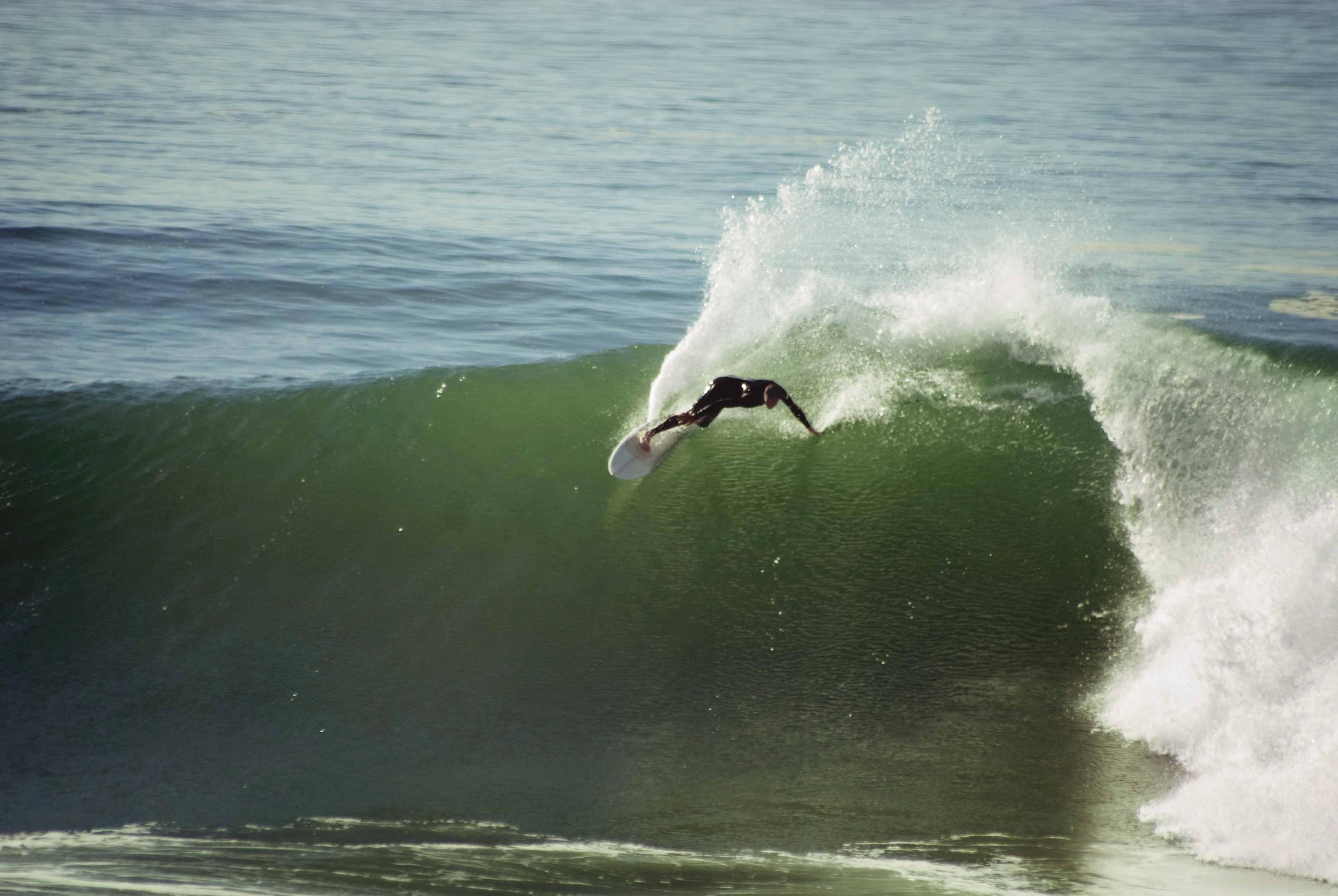
Near the city of Agadir sits the fishing village of Taghazoute, home to the perfect right-hander Anchor Point. This is a very long wave (800 meters and more on a good day) with fast sections, spots for off-the-lips and cutbacks, barrels, and an incredible amount of power. The wave needs a westerly swell of at least 6ft (1 meter+) to work properly. It handles all tides but needs a bigger swell at higher water levels — generally, the lower the tide the better the wave. The wave starts behind some rocks and peels along the rocky shoreline. The takeoff is relatively easy but then the wall stands up and you need to generate speed fast. On a good day you can score solid barrels behind the rocks. Less experienced surfers can pick up the wave at more southern sections where it's smaller and mellower. However, continuing toward the beach you'll hit a heavy, very fast barrel section. On rare days you can get amazing tubes there and actually make them, but most of the time the wave closes out.
Mystery Point
The Taghazoute area has tons of other point breaks to surf. About 700 meters north of Anchor Point sits Mystery Point — an A-frame peak (breaks both ways) over a rock shelf (doesn't work at low tide). It's a softer wave suited for performance surfing and riders looking for less adrenaline.
Killer Point
Another kilometer and a half further north lies another world-class wave: Killer Point. The name sounds scary, but the truth is it's called that because the paddle out kills your arms. Expect a 30-minute paddle at minimum. There's also a way to descend the cliff (at least 100 meters high) and jump off the rocks near the water, but that's not recommended if you don't know the path well. The wave itself comes from very deep water, making the takeoff at the peak far from easy. It's a very long wave with massive walls since it catches the full swell height (typically a meter taller than Anchor Point). Very long, very powerful — not recommended for beginners.
Boilers
A few kilometers further north (you'll need a car) is Boilers, yet another perfect right-hand point break. It's very exposed to wind since it sits at the edge of the bay, so if it's windy you're better off heading to the breaks inside Taghazoute's bay. Very fast and radical wave for experienced surfers. The entry and exit here are among the toughest you'll encounter, so prepare accordingly (surf booties are strongly recommended).
Tamri
Head even further north and you'll reach Tamri, a fun beach break for smaller days, especially when the Taghazoute points aren't working. Here you can find perfect lefts, which are quite rare for this area.
Of course, there are many more spots to surf and explore beyond these. We'll reveal some of them in Part II of this guide.

Comments